Raymond Cheung
Chartered Actuary · CRO · Board Adviser · Singapore
Speaking at the Q3 General Insurance Drinks and Discussion, I asked a room of actuaries a question we rarely turn on ourselves: if you apply the same rigour to your own life that you apply to your clients, what does the answer look like?
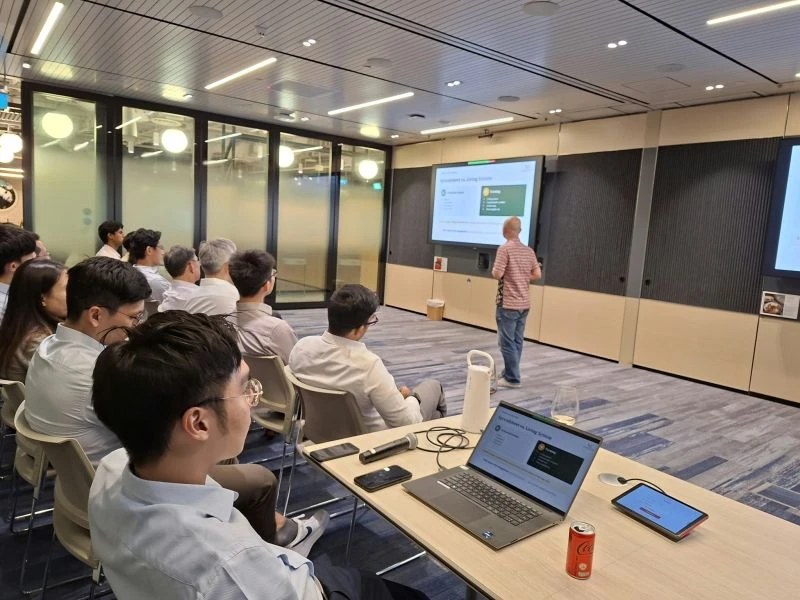
I was invited to speak at the Q3 General Insurance Drinks and Discussion recently, and I chose not to talk about reserving or capital modelling. I wanted to say something more personal, something I have been sitting with since a health event in December 2023 that reshaped the way I think about purpose, priority, and urgency.
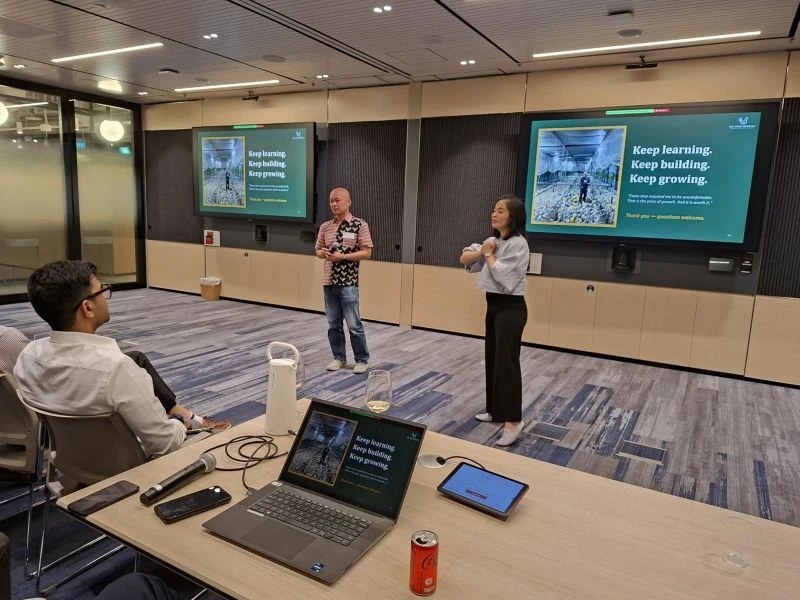
The talk started with a question: what does a chicken farm have to do with actuarial science? The short answer is everything. The longer answer is what I want to explore here.
We are experts in risk management, except on ourselves
Actuaries spend their working lives managing other people's risk. We monitor capital adequacy, stress-test balance sheets against 1-in-200-year events, and model emerging risks with precision that most professions can only approximate. We are exceptionally well trained in thinking about low-probability, high-consequence outcomes.
And yet, almost none of us apply that same thinking to our own lives.
“We stress-test balance sheets against 1-in-200-year events. When did we last stress-test our own income, our own health, our own alternatives?”
We are living through a VUCA world, volatile, uncertain, complex, ambiguous,and 2026 has made that concrete in ways that were theoretical even two years ago. AI-led job displacement is not a future scenario. It is happening now, across functions that actuaries occupy: pricing analysis, data modelling, regulatory reporting. The question is not whether disruption will arrive. The question is whether you have built any recourse for when it does.
The stress test question
Ask yourself the same question I posed to the room: if you were out of work or unable to work in three months, what would happen? Do you have a second income? Do you have alternatives that are genuinely yours, not dependent on an employer's continuity or a job market's appetite?
For many of us, the honest answer is uncomfortable. We have spent enormous effort shaping the companies we work for. We have not spent comparable effort shaping our own resilience.
Why I built a farm in Batang
My own answer to that stress test was a poultry farm in Batang, Central Java, run under the KOC Farm and Agriwise banner. I chose food production deliberately. Food security is a real, tangible need, one that AI cannot automate away, one that serves a growing region, and one that produces something the world will always require. It is not glamorous. It is also not meant to be. It is meant to be resilient.
The decision came out of the health event in late 2023. When something forces you to reckon with your own vulnerability, you stop treating resilience as an abstract concept. You start asking which of the things you do today will still matter if your circumstances change tomorrow. For me, the answer pointed toward productive assets in the real economy, toward building something with a life outside my professional identity.
What actuarial thinking looks like when you turn it inward
When you start applying actuarial discipline to your own life, certain things that consumed your attention stop appearing important. You recalibrate. The long hours building a function for someone else's balance sheet look different when you ask whether you have anything comparable being built for yourself. The skills are the same, probabilistic thinking, scenario analysis, long-horizon modelling,but the subject changes.
- Map your income concentration risk. If one employer is your only source, that is a single-point-of-failure. No actuary would leave a portfolio structured that way.
- Model the downside scenarios. What does your household look like at 50% income for twelve months? Do the maths before the event, not during it.
- Build productive assets, not just savings. Savings deplete. Assets, a business, a property, a productive enterprise,can compound and generate income when you cannot.
- Invest in skills that travel. Technical expertise tied to a single employer or a single software suite is an asset with concentration risk of its own.
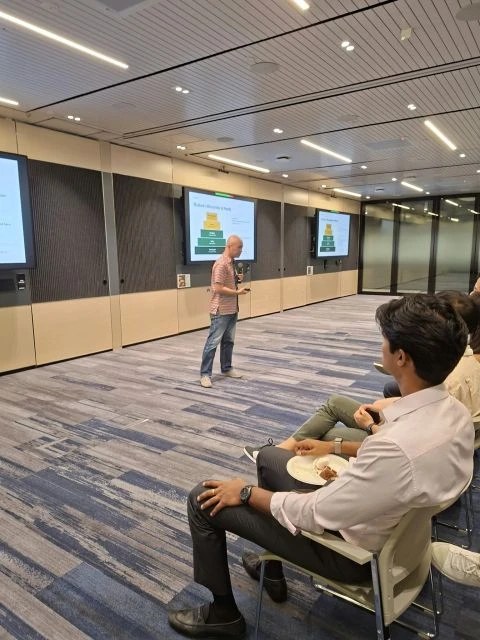
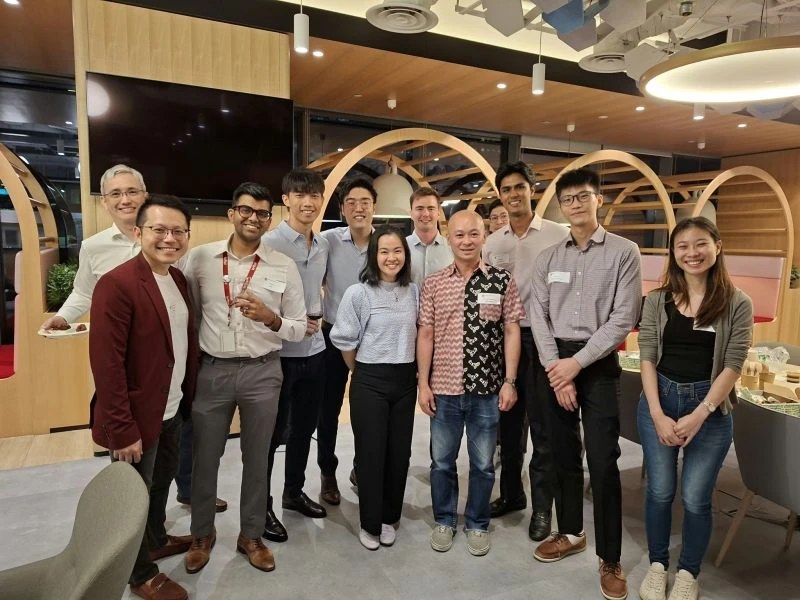
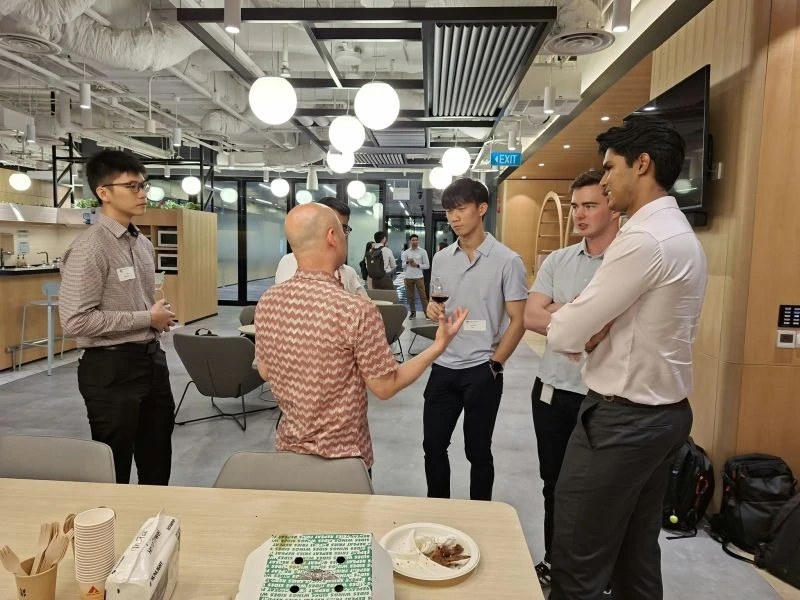
The room at the Q3 event was full of sharp people, practitioners who think clearly about risk every day. The conversation that followed the talk was honest in a way that professional events rarely are. Several people acknowledged they had never framed their own careers using the same tools they apply at work. That is not a criticism. It is simply where most of us start.
The next step is to change that. Think in probabilities. Then step out and build.
Common Questions
Is this about leaving the actuarial profession?
No. The argument is about diversifying outside it, building income and assets that do not depend entirely on your actuarial employment. The profession remains valuable. Concentration in it is the risk worth managing.
What kind of alternatives make sense for an actuary?
That depends on the individual. Productive real assets, property, agriculture, a small business,are one category. Consulting or advisory income independent of a single employer is another. The principle is the same: reduce single-point-of-failure exposure in your personal balance sheet.
How does AI change the risk calculation for actuaries specifically?
AI is compressing the time required for tasks that used to take actuarial teams days or weeks, pricing analysis, data manipulation, regulatory reporting. That does not eliminate the profession, but it changes its shape. Actuaries who add value through judgement, communication, and governance will be more resilient than those whose value is primarily in computation.
Related insights
About the author
Raymond Cheung is a Chartered Actuary, C-suite executive and board adviser with more than 20 years of experience across Asia in risk management, insurance, ESG and corporate governance. He is the CEO of CER Consultancy and an accredited trainer at SMU Academy and the Singapore College of Insurance.